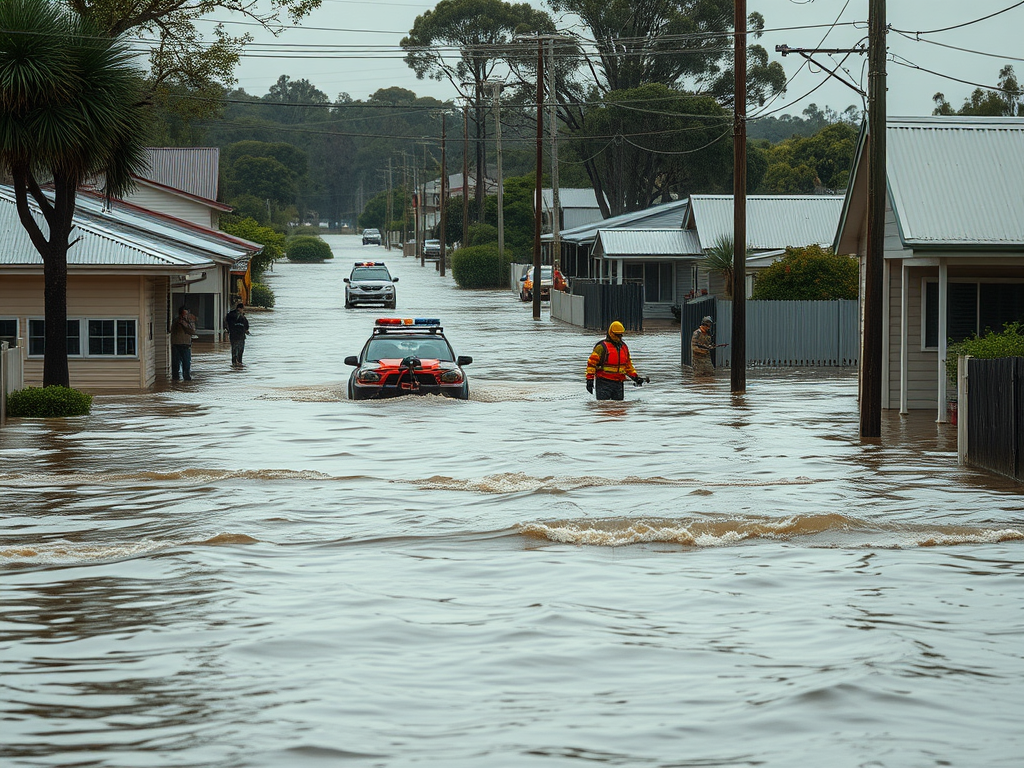
Southeastern Australia is grappling with catastrophic flooding after relentless rainfall inundated communities across Victoria and New South Wales (NSW), forcing thousands to flee their homes. Emergency services are engaged in relentless rescue operations as rivers overflowed, submerging towns, destroying infrastructure, and isolating residents. The disaster underscores Australia’s vulnerability to extreme weather events, with climate scientists pointing to intensifying rainfall patterns linked to global warming.
Affected Areas:
- Victoria: The towns of Rochester, Echuca, and Maribyrnong are among the hardest hit. In Rochester, 90% of homes suffered damage, with the Campaspe River peaking at record levels.
- New South Wales: Moama and Deniliquin faced severe flooding as the Murray River surged, while rural communities in the Central West were cut off by submerged roads.
- Tasmania: Northern regions also experienced flash flooding, adding to the crisis.
Causes and Weather Patterns:
A slow-moving low-pressure system collided with a moisture-laden air mass, dumping a month’s worth of rain in 48 hours across parts of Victoria. The Bureau of Meteorology (BoM) issued “Major Flood Warning” alerts for multiple rivers, including the Goulburn and Campaspe. While not directly tied to La Niña, the event aligns with trends of increasingly erratic and intense rainfall attributed to climate change.
Human Impact:
- Evacuations: Over 34,000 residents received evacuation orders in Victoria, with thousands more displaced in NSW. Emergency centers in Bendigo and Shepparton are sheltering displaced families.
- Casualties: No fatalities reported, but emergency services performed hundreds of rescues, including airlifting stranded residents.
- Infrastructure: Key highways (e.g., Hume Freeway) closed, and train services suspended. Over 50,000 homes lost power at the peak.
Economic and Environmental Toll:
- Agriculture: Dairy farms in Gippsland and fruit orchards in NSW’s Riverina region face ruin, with losses estimated in the hundreds of millions.
- Property Damage: Insurers anticipate claims exceeding $1 billion AUD, compounding recovery challenges.
Response and Recovery Efforts:
- Emergency Services: Victoria’s State Emergency Service (SES) conducted 6,000+ rescues, aided by the Australian Defence Force.
- Government Aid: Federal and state governments announced immediate disaster payments (1,000AUDperadult,400 per child) and long-term rebuilding grants.
- Community Resilience: Local volunteers rallied to sandbag towns, while social media groups coordinated donations of essentials.
Voices from the Ground:
- Emma Wilson, Rochester Resident: “We’ve lost everything. The water rose so fast—we barely had time to grab our pets.”
- Dan Andrews, Victorian Premier: “This is a profound crisis. We will stand with these communities through recovery, no matter how long it takes.”
Climate Context:
Scientists warn that Australia’s flood risk is escalating, with a 15% increase in extreme rainfall intensity over the past two decades. Urban planning critics argue that outdated infrastructure and inadequate floodplain management exacerbate vulnerabilities.
Looking Ahead:
While waters begin to recede, the focus shifts to long-term adaptation. Proposals include revising building codes, restoring wetlands, and accelerating climate resilience funding. For now, displaced families brace for months in temporary housing, their lives upended by nature’s fury.
How to Help:
Donations to the Australian Red Cross and SES Victoria are urgently needed. Volunteers can register via state emergency portals.
Conclusion:
As southeastern Australia confronts yet another climate-driven disaster, the floods serve as a stark reminder of the urgent need for global and local action to mitigate future risks. In the words of BoM climatologist Dr. Andrea Rawlins: “These events are no longer ‘once in a lifetime.’ They’re becoming our new normal.”
 World Today
Leave a comment